
Ahoy Montevideo Rustaceans!
Last updated: 2018-09-08


Developer Outreach / DevRel

Mozilla TechSpeakers

Tessel Project, JS+HW hacker

Rust & WebAssembly
István Szmozsánszky "Flaki"
@slsoftworks
[]()

…a.k.a. What To Expect when You're (Web)Assemblin'

On Today's Agenda:
Why WebAssembly? Why Rust? Why Rust-WASM?
- What is Webassembly, what is it good for?
- What does Rust have to do with WebAssembly?

A little WebAssembly (hi)story
WebAssembly is an MVP, with many more features still to come
The WebAssembly spec (and implementations) currently encompass an "MVP", minimum viable product. WebAssembly (after years of work) shipped this MVP implementation in 4 major browsers, working closely together at almost the same time. This type of coordination required a lot of of compromises to be made, so WebAssembly shipped with a minimal featureset, with a lot more features currently in the work.
But we shouldn't jump ahead…

ASM.js
- The compile-to-web movement is already >5 years old!
- ASM.js kickstarted something new…
With JavaScript engines getting faster and the improvements in JIT compilation, what was previously impossible (or simply unbearably slow), it became possible: asm.js landed in 2013 in Firefox Nightly and promised compilation of low-level code into JavaScript, to be executed at high speed inside the same JavaScript VM as any other JS.
Compile-to-JS wasn't born with ASM.js (GWT and others have been targeting browser-js as an output before it), but it is what made really it possible to target the browser with large, low-level codebases, yet keeping it still fast enough.
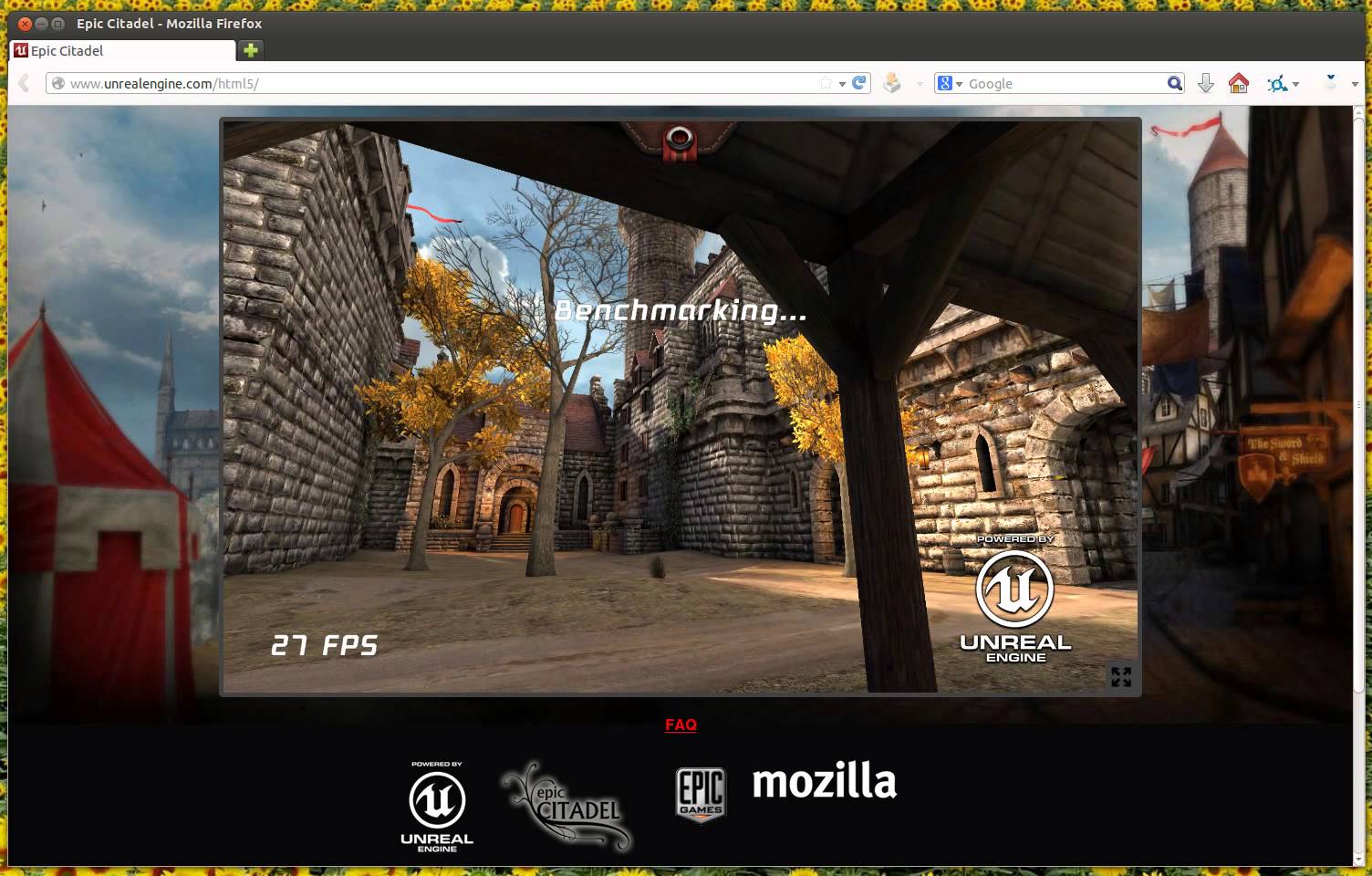
ASM.js was really fast
The "Epic Citadel" Unreal 3 demo running smoothly in Firefox 20 thanks to asm.js
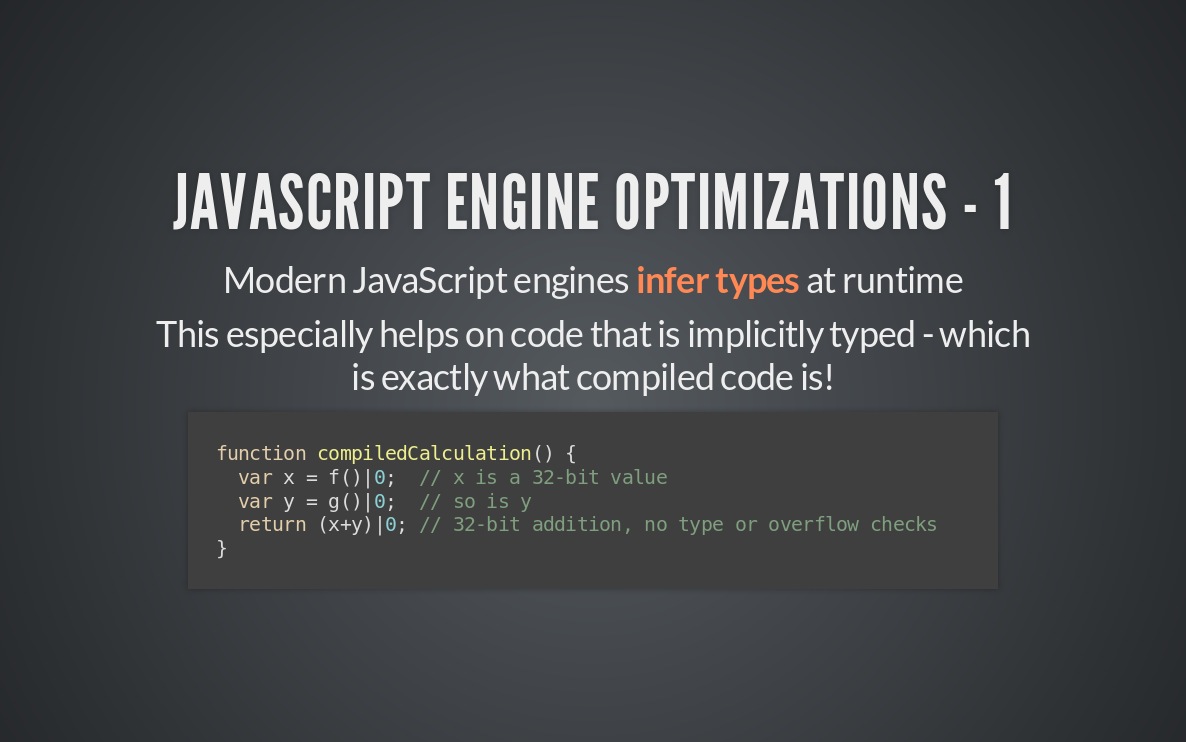
ASM.js wasn't completely new
- Same language, same VM, no plugins
- "One JavaScript"
- Iterative update to the existing ecosystem
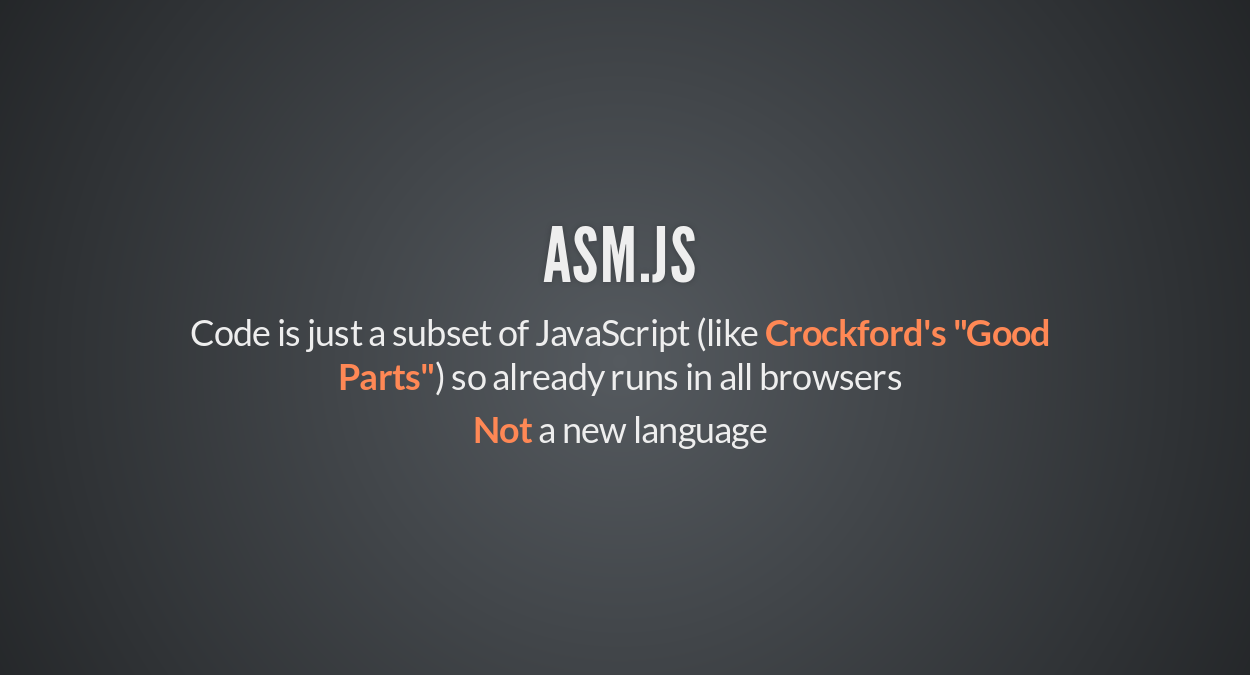
Still JS, albeit a little strange
Asm.js is a "JavaScript subset" - the same engine parsed the code as the JS
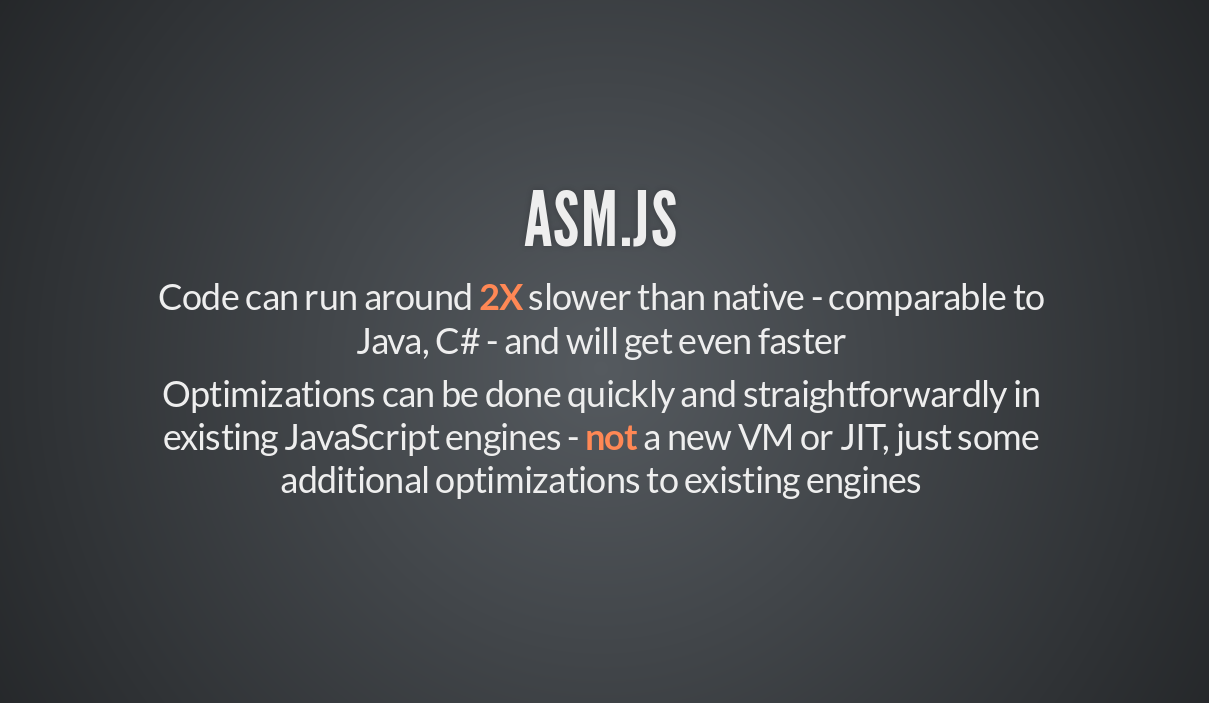
"2x slower" is the new "blazing fast" :)
- You wouldn't really write it by hand…
- The Asm.js-compilation preserved the type informations of source language
- Code is compiled/executed by the same JS VM!
Asm.js was still JS - and that meant the Asm.js compiler/VM was…simply the JS VM! Not another VM, same engine, same compiler, same optimizations, same memory (and garbage collector), same (secure) sandbox. And even though everything was the same - the world was never the same again. Eventually, Asm.js got from 200% to 133-160% of the performance of native-compiled C-code for some workloads.
There was just one tiny issue…
except…
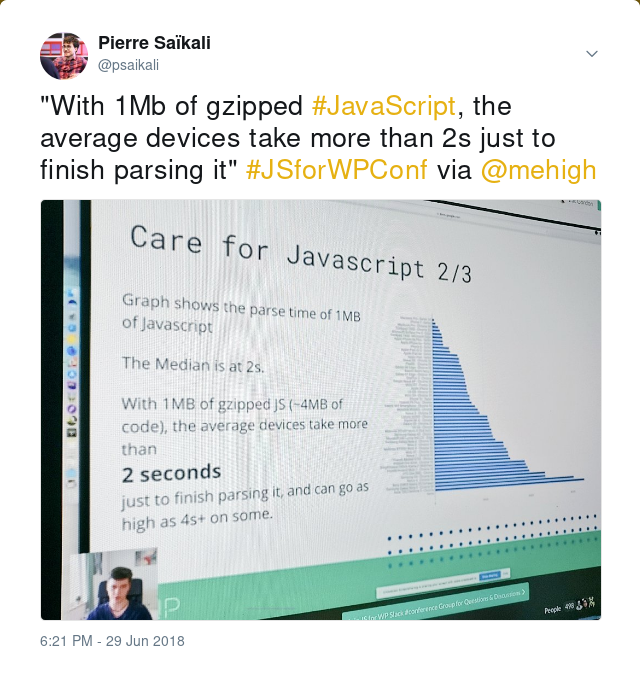
Parsing JS is dog slow…
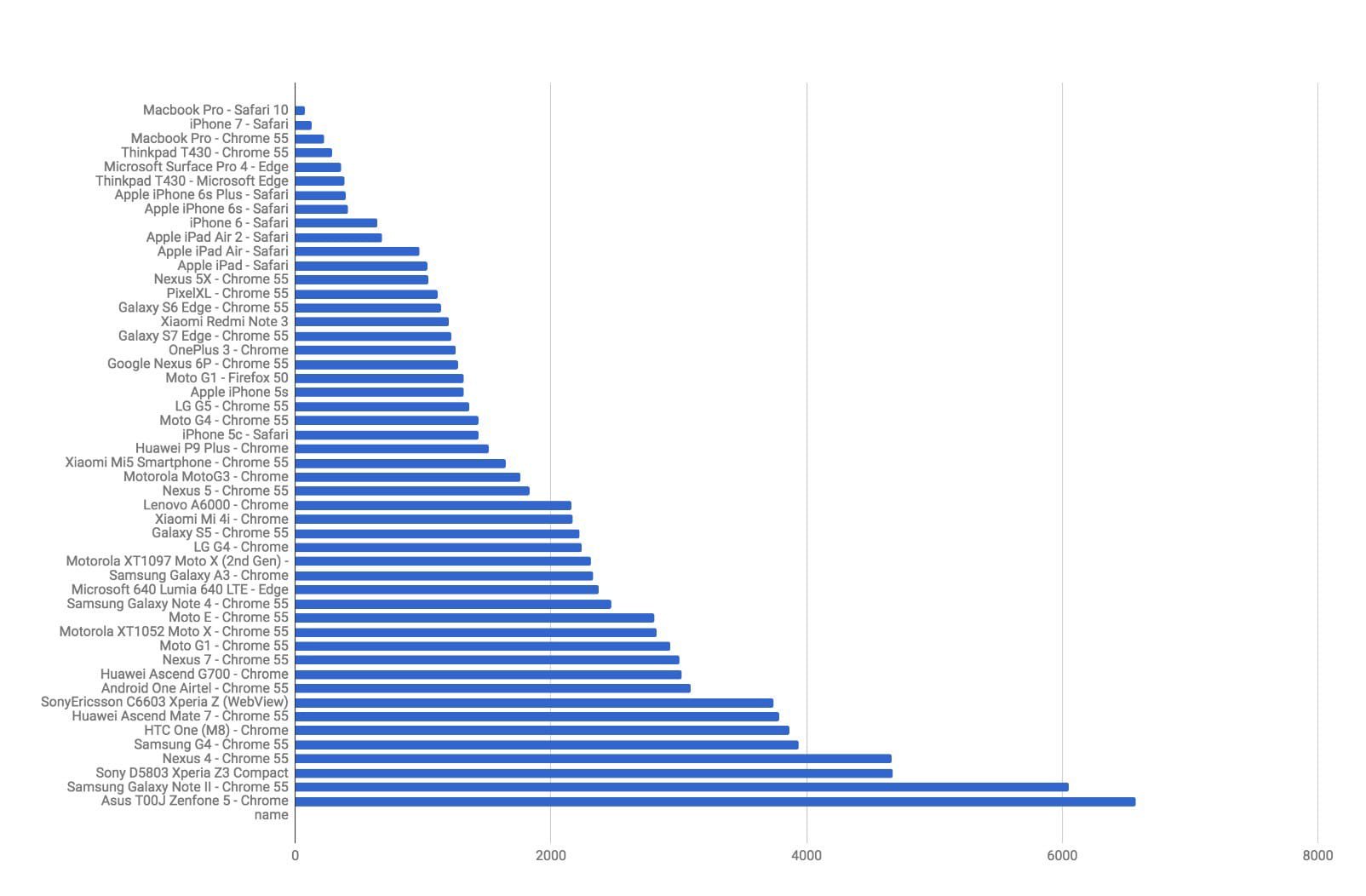
Parsing JS is dog slow…
Enter WebAssembly?
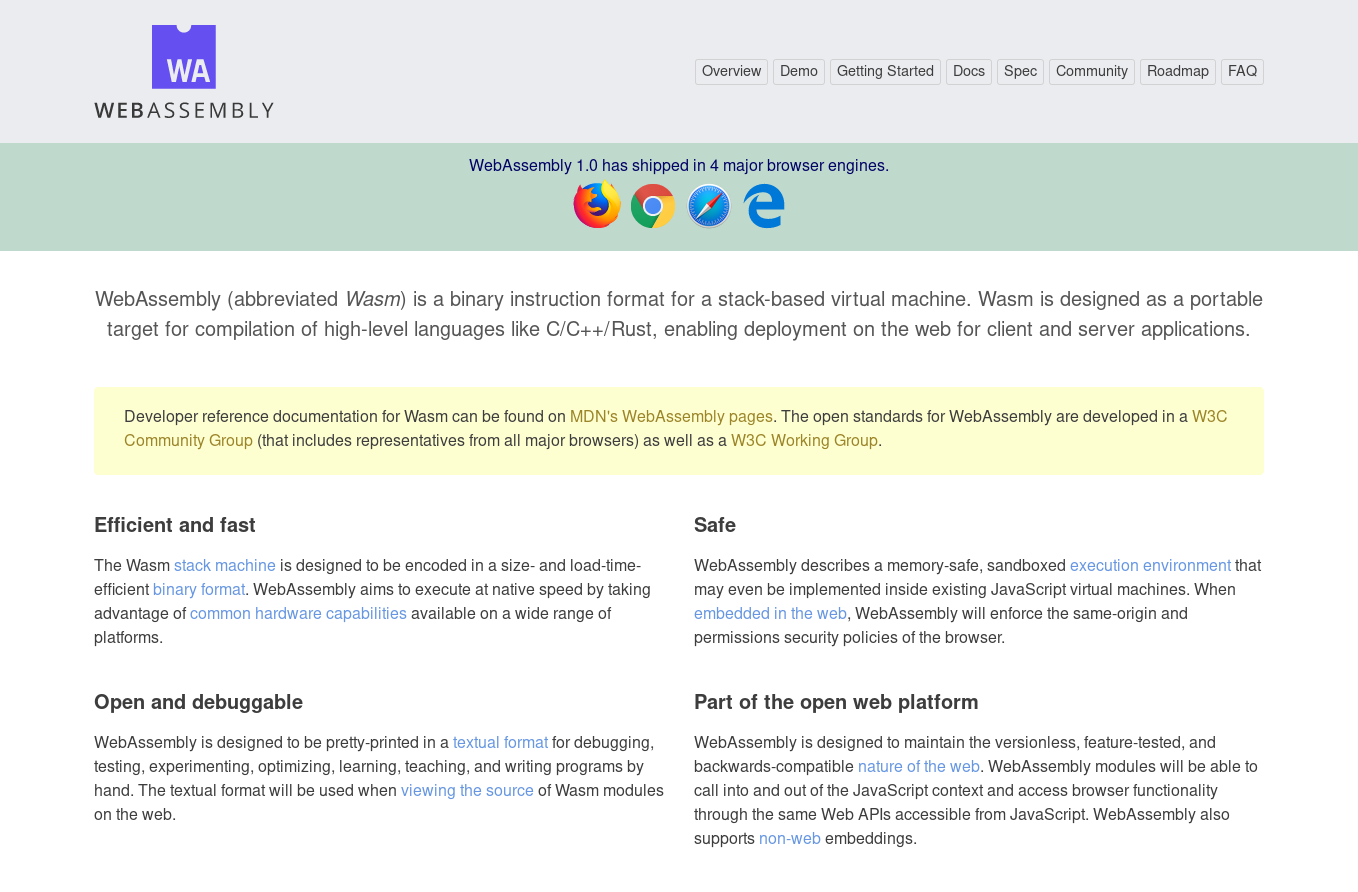
What is WebAssembly?
- Fast & efficient
- Safe sandbox
- Integral part of the web platform
If JS is slow to parse, why not make our own, optimized binary format? More compact, easier to parse.
JITs are running on real hardware, so let's make our code's types fit this hardware more - (almost) everything is a number! (…now with 100% more 64-bit types!)
But still runs in the exaxt same JS VM, uses the exact same low-level optimizations, and lives in a symbiotic relationship with the host browser, JavaScript, DOM etc.

Your go-to "compile-to-the-web" tool:
Emscripten
…it even uses the same tools: Emscripten, Mozilla's go-to tool for C++-to-JS compilation has full support for WASM, and even prefers it.
There are other tools, as well, Rust for example has really mature out-of-the-box tooling support for WASM output.
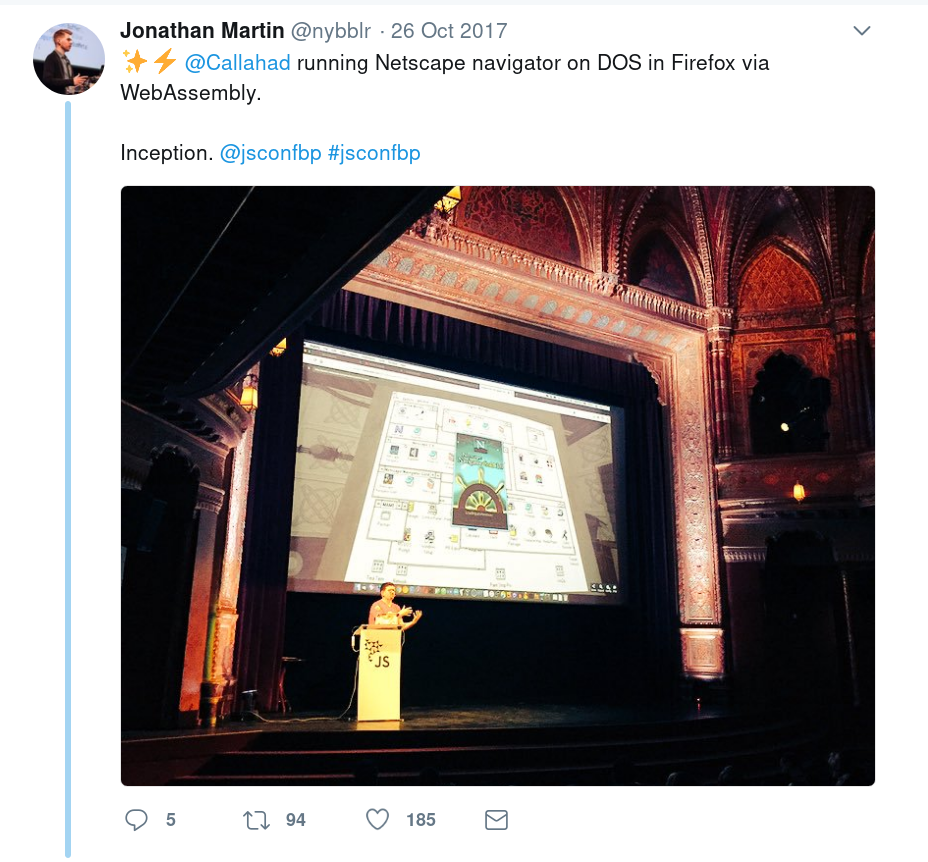
WASM has some cool tricks
Emulating Netscape, running inside Firefox? Because why not…
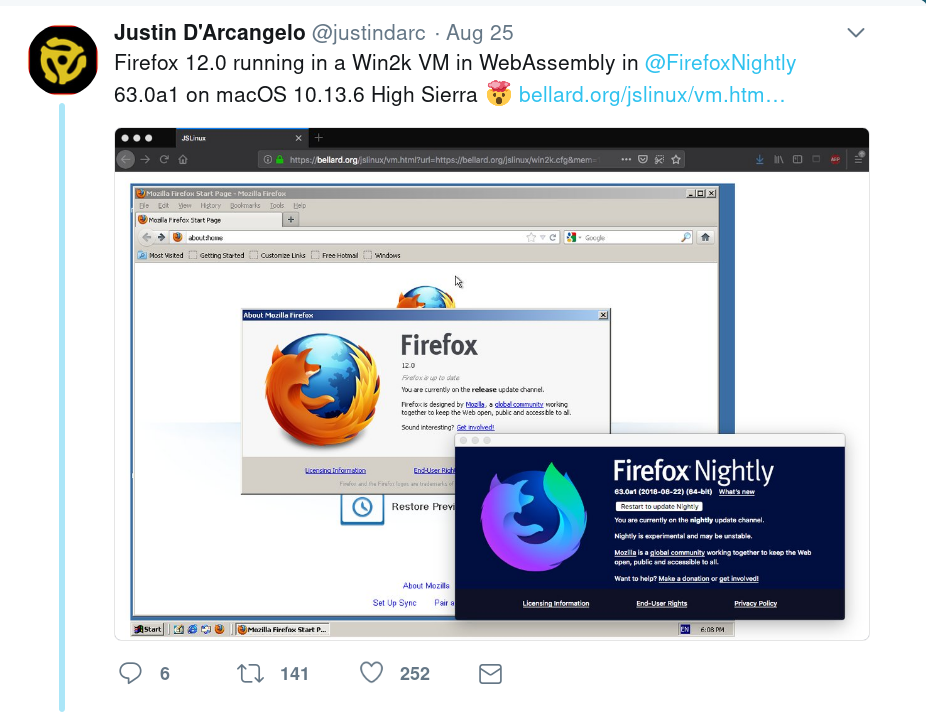
Really cool ones
A JSLinux emulated x86 VM running Windows 2000 - inside the browser using WASM
WASM is not a toy
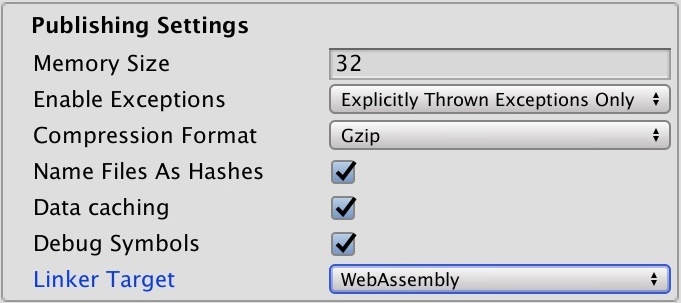
…well, okay, maybe sometimes it is…
- One of the biggest proponents of Compile-to-JS has always been game engines
- Unity now has official support for the WASM target
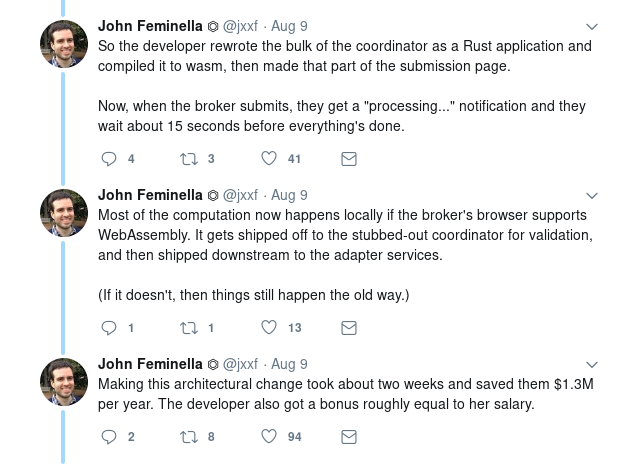
But it's good for business!
WebAssembly allows the web platform do things that previously were not possible, not economical, or both.

But is WebAssembly trying to replace JavaScript??
- No it is not.
- Maybe in 2035 that might happen, but not anytime soon…
- Gary Bernhardt's "The Birth and Death of Javascript"
And this is an important point. WebAssembly wasn't created to replace JavaScript - it was created to replace Asm.js. It was created for offloading demanding computation into a more optimal format, while JavaScript is there for you to cater for scripting, interaction and various other aspects of the browser. They work together hand in hand more than against each other.
Again: sure it's possible to do data-crunching in JS, or an entire website in WASM, it's just not practical, economical and is not something those tools are good at.
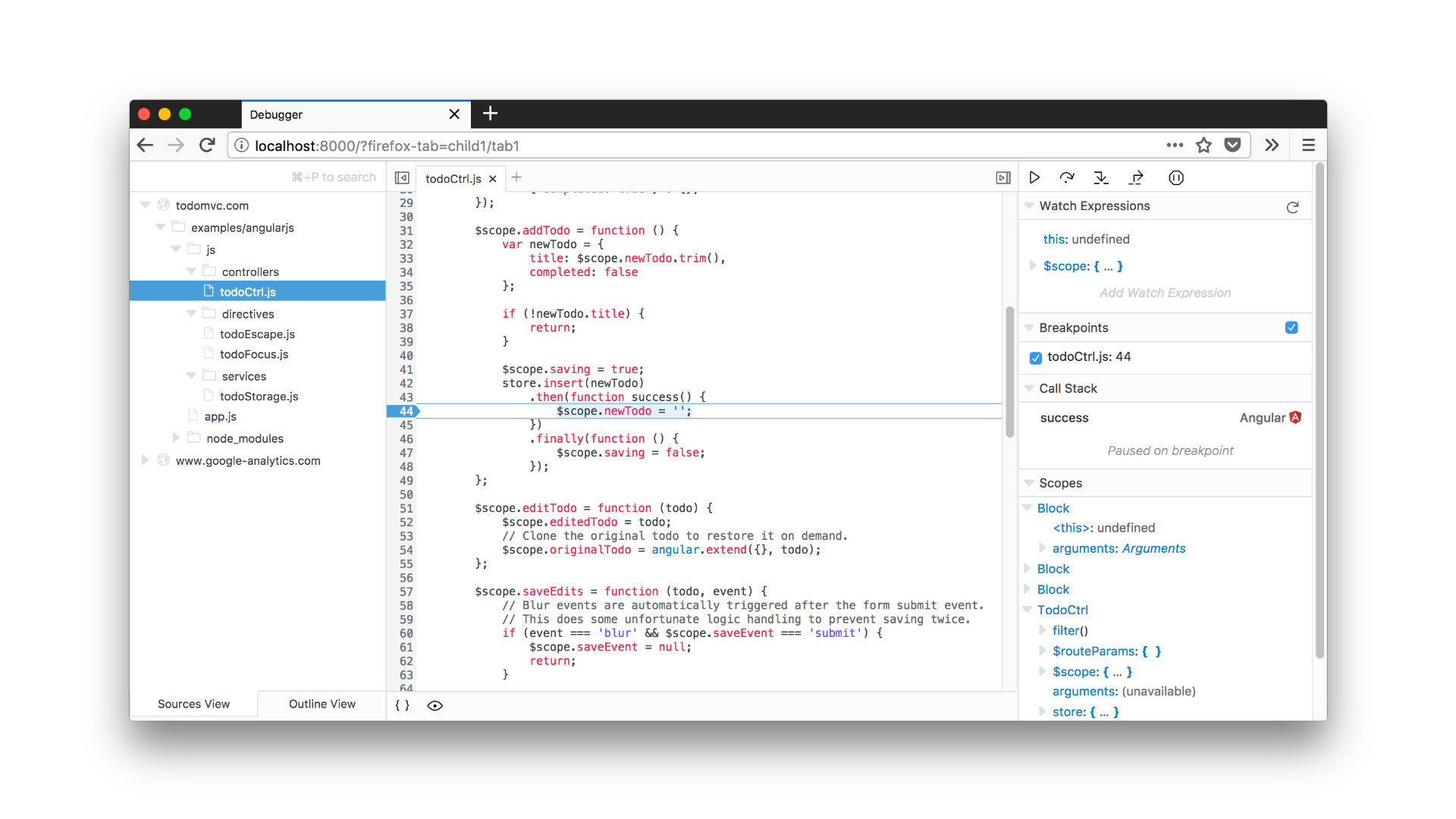
Even inside your browser, there's WebAssembly!
- "Oxidizing Source Maps with Rust and WebAssembly"
- Nick Fitzgerald tells the story of how they used WebAssembly to speed up Firefox's built-in debugger

Rust <3 JS
But enough about WebAssembly - we are at a Rust meetup, so what does Rust have to do with any of this?
Rust loves JavaScript!

Rust <3 WASM <3 JS

The Rust-WASM Pipeline
JavaScript doesn't exist in a vacuum. The language exists in its ecosystem, that consists of millions, probably even billions of lines of shared code - npm packages. Various tools have made it possible to reuse code (whether ours or others) in JS projects - and there is a plan to make WASM interact and integrate with this same ecosystem.
There is an entire pipeline envisioned, from the original source language code (be it Rust or otherwise), through various tools producing an NPM package just as easily (re-)usable and embeddable in JS projects as any other JS package.
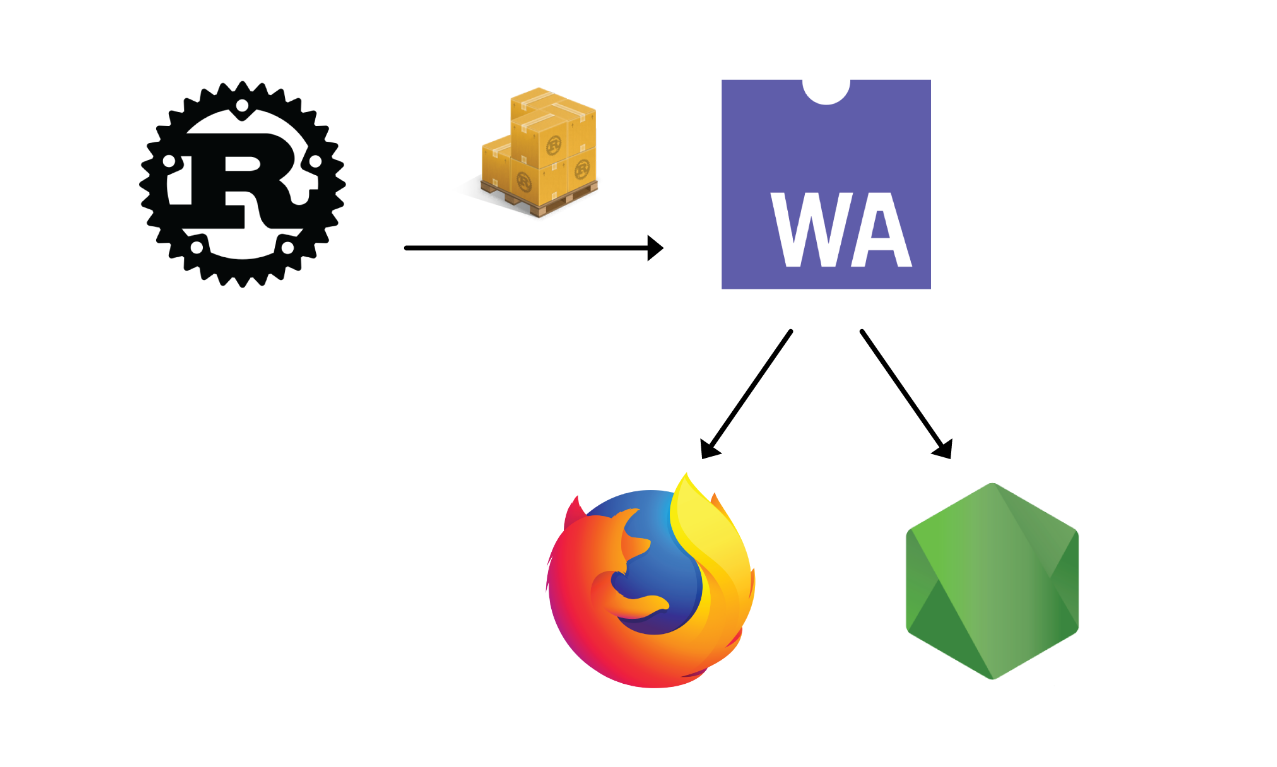
wasm-pack
wasm-pack lets you generate NPM packages out of Rust-generated WebAssembly code

wasm-bindgen
wasm-bindgen helps you ease the communication between your code (WebAssembly) and JS
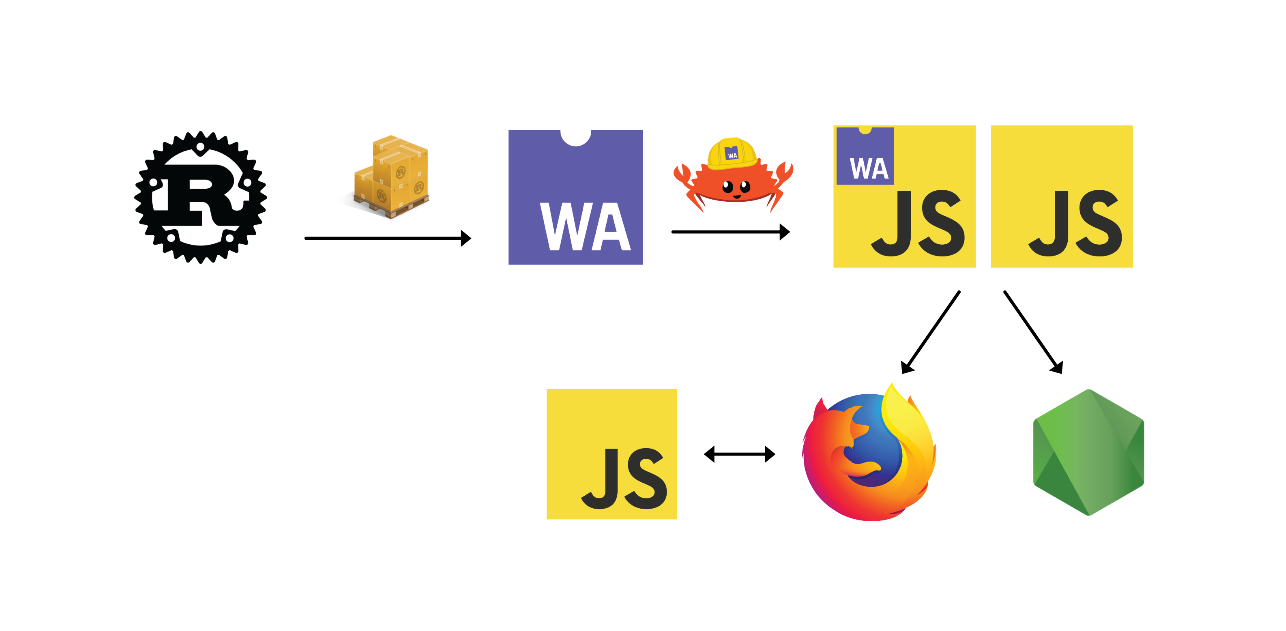
Rust <3 WASM <3 JS
One's code can be seamlessly turned into WebAssembly modules that:
- Operate on native JS language elements (
js-sys)- Call browser- & node-native API-s or DOM methods (
web-sys)- Even interact & call into with other JS libraries!
…all this from within the original Rust source!

But why Rust ?
Hack without fear in Rust
- Safe, Fast, Parallel
- Great package manager
- Minimal runtime
- Lots of web people :)

Speed ⚡ Without Wizardry

But: Go
- Go now supports WebAssembly compilation
- It will compile in its own runtime, though
But: TypeScript
- You cannot really compile JS to WebAssembly
- there would be really no point in doing so, at least
- TypeScript, on the other hand, is a different story!
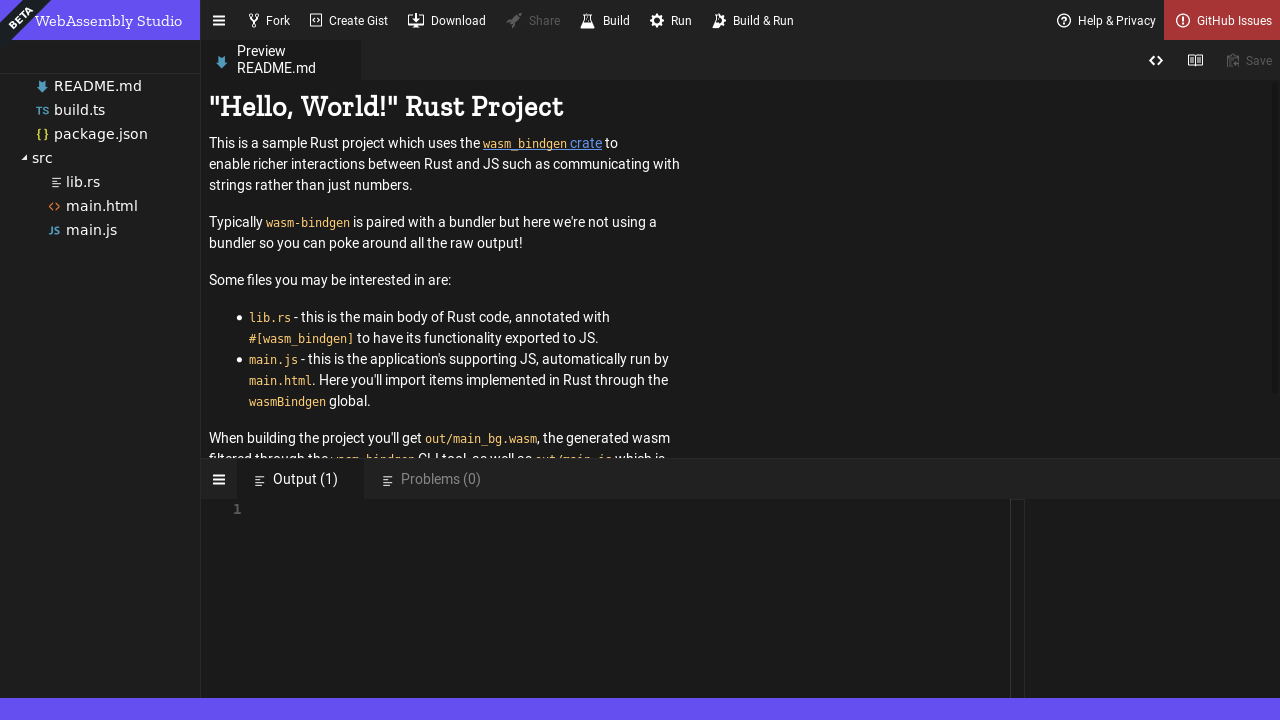
Extensive (and growing) tooling!
Shameless plug…

Come to NodeConf Argentina in October!
2018.nodeconf.com.ar - I'm speaking, among other things about WebAssembly & giving a workshop in October in Buenos Aires

Come to Rust LATAM in March!
rustlatam.org - Lots of amazing things, talks, workshops. Learn more about Rust, WebAssembly and many, many more exciting topics! I'll be there. ;)

Thanks!
talk.flak.is/wasm
@mozhacks
 @slsoftworks
Reading list:
- The ASM.js FAQ with Alon's original presentation
- WebAssembly is more than just Web - and definitely more than just the revival of Flash - articles by Steve Klabnik
- Understanding WAT, the WebAssembly Text Format - an MDN guide by Chris Mills
- A workshop-style intro to Rust+WebAssembly & wasm-bindgen by Ashley Williams & Steve Klabnik
- Hack Without Fear! — Fearless concurrency in Rust and in Servo/Firefox
- An explainer on wasm-bindgen by Alex Crichton and wasm-pack by Ashley Williams
- WebP image decoding using WebAssembly & emscripten
- Mozilla's streaming & tiered WebAssembly compilation - a blogpost by Lin Clark and V8's WebAssembly baseline compiler: Liftoff
- Nick Fitzgerald's post on embedding WASM in the devtools with Vyacheslav's response & Nick's followup
- Dan Callahan presents about WebAssembly at JSConf Budapest, runs DOS & Netscape in a browser